
Hardware and software are built in clearly separated layers.
AUTONOMOUS GROUND VEHICLE // DEVELOPMENT LOG
From tracked platform to autonomous outdoor robot.
JÄGER-1 UGV is a modular development prototype for robust teleoperation and autonomous outdoor navigation. This site documents the real project progress – from drivetrain and power systems to sensing, ROS 2, computer vision and autonomous navigation.
STATUSPROTOTYPE BUILD
CURRENT PHASETRL 4 JÄGER-1 Web UI Dashboard, Live Telemetry, Map, System Statuses, Event Log, Mission Planning.
UPDATEDOct 15, 2026
CURRENT BUILDCurrent development state
41%
Tracked platformready
Power systemready
Motor controlready
Backend / Frontend / Enthernet connectionready
Camerasactive
Sensorsplanned
Lidar integrationplanned
3D Mappingplanned
TRL 4 / UGV / DEV-2026
OVERALL PROGRESS41%
TRL 4 JÄGER-1 Web UI Dashboard, Live Telemetry, Map, System Statuses, Event Log, Mission Planning.
01 // PROJECT
A development vehicle becoming autonomous step by step.
The approach is deliberately modular: first, a reliable remotely controlled tracked prototype is created. Vehicle compute, communications, cameras and LiDAR are then added. Only after these layers are stable do mapping, localization, path planning and autonomous navigation follow.
This website serves both as a project log and as a compact technical overview for partners, sponsors and interested visitors.
Outdoor operation, tracked mobility and real test conditions are the focus.
ROS 2, sensor fusion and navigation form the later autonomy layer.
02 // SYSTEM
Current target architecture
The prototype grows in layers. Components can be replaced during development without rebuilding the entire concept.
Tracked platform
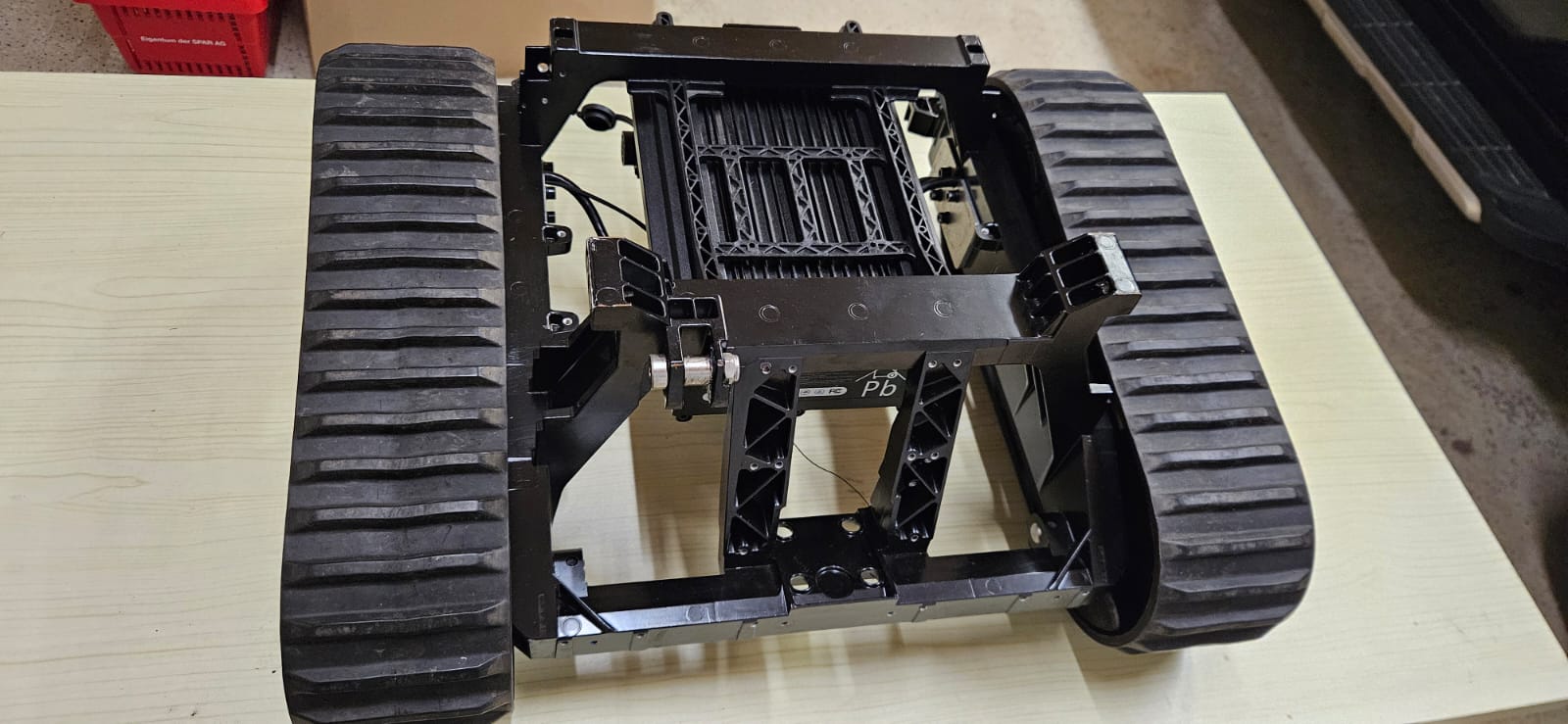
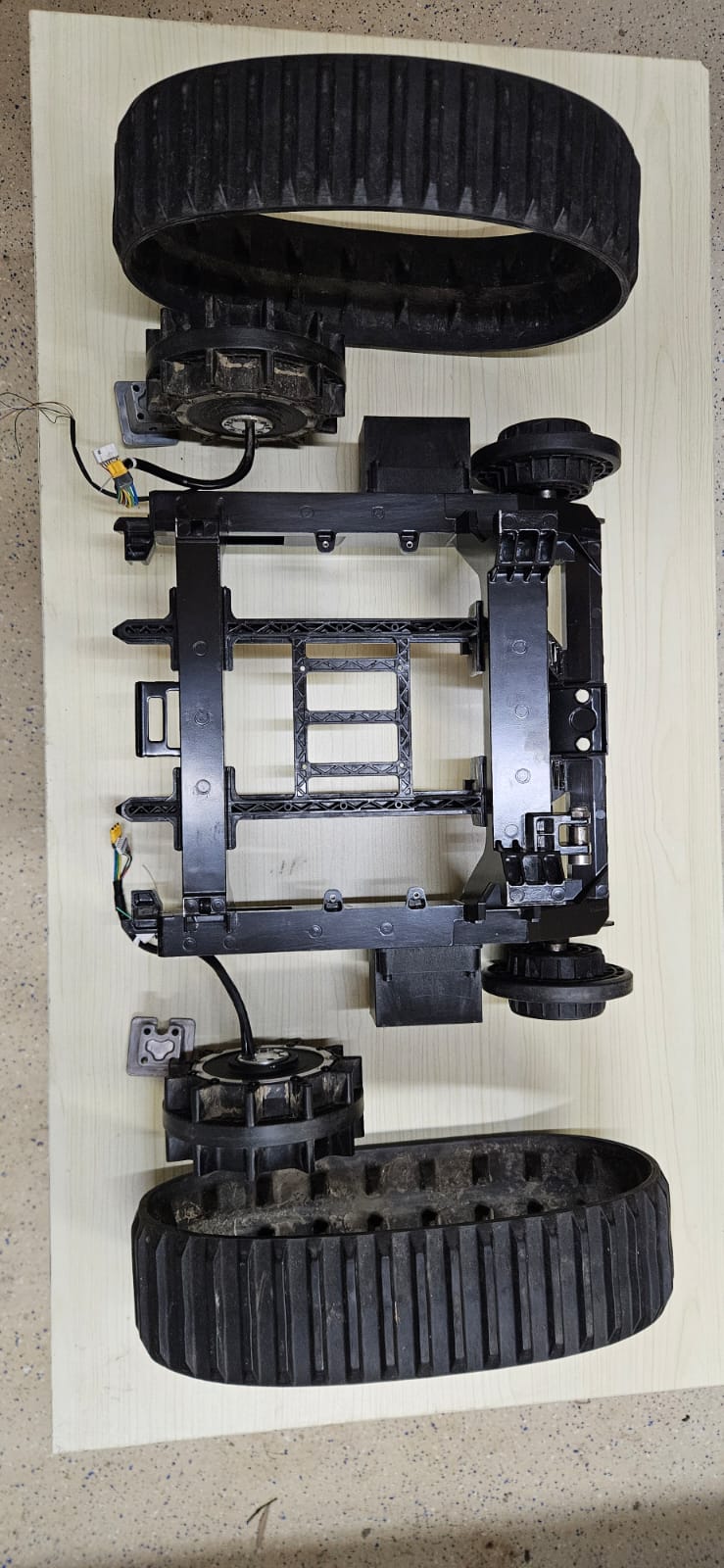
Lymow base with frame, tracks and existing drive motors as the development platform.
VESC Motor Control
Flipsky 75100 Pro V2 for precise motor control, telemetry and later CAN integration.
NVIDIA Jetson
Planned onboard computer for ROS 2, sensor fusion, computer vision and autonomous navigation.
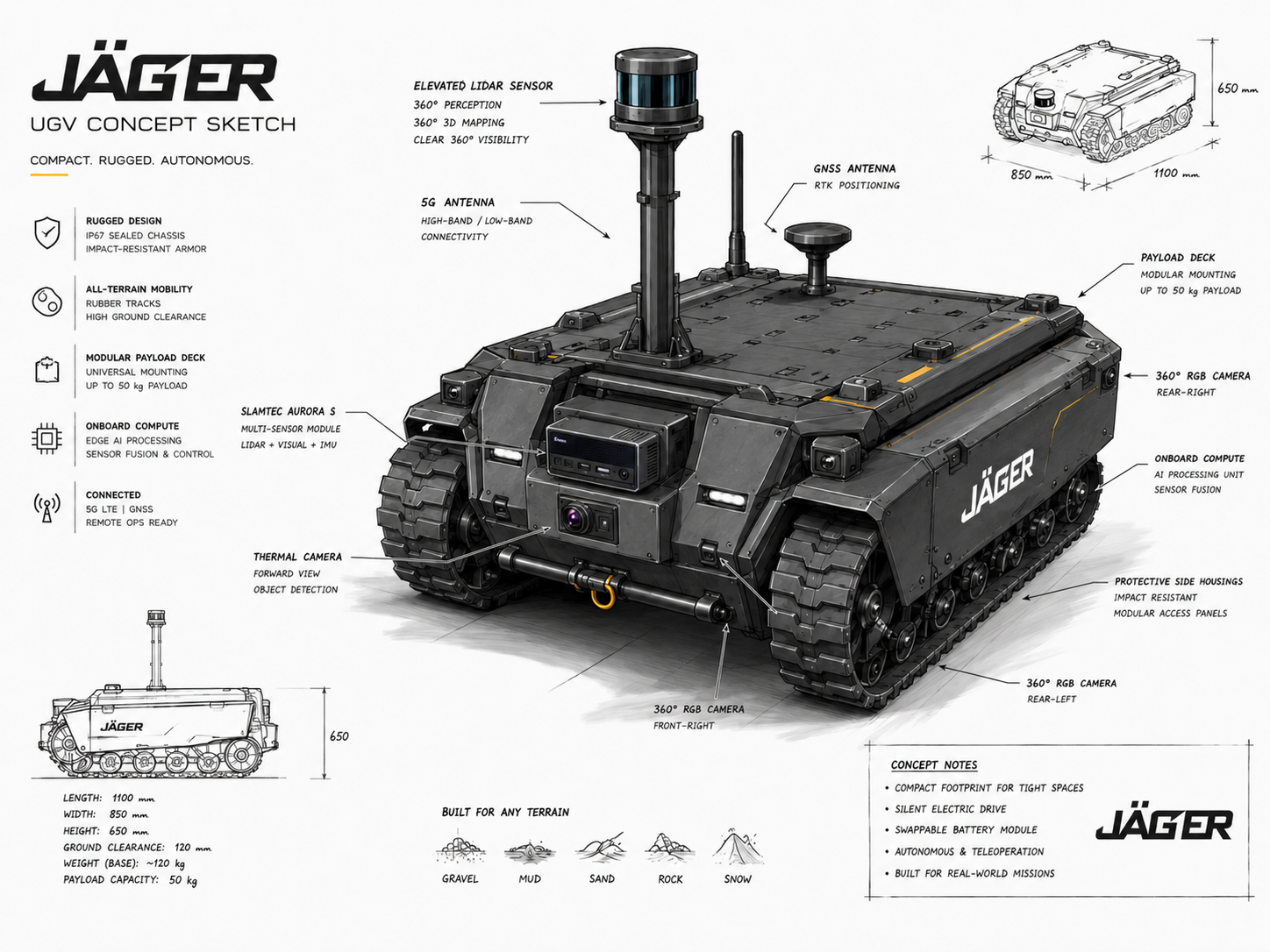
LiDAR + Aurora S
Elevated 360° LiDAR plus a SLAMTEC Aurora S front module for mapping, SLAM and obstacle detection.
360° Video + Thermal
Four compact RGB cameras around the vehicle plus a forward-facing thermal camera.
Remote + 5G
Manual setup via RC, later via SIYI UniRC, SkyDroid-based remote operation, web UI, and cellular connectivity.
SPONSORS & PARTNERS
Technology that helps make JÄGER-1 possible.
Companies and partners supporting the project with components, expertise or direct assistance.
Technologie Partner
Createc Fertigungstechnik GmbH
3D Printed Parts & Remote Systeme
Createc Fertigungstechnik GmbH is currently supporting the project by providing additive manufacturing technology and the Skydroid G30 control unit, which is needed to manually control the Jäger-1 UGV or to activate its autonomous mode. Furthermore, the entire mission control system is operated via remote control.
Visit website ↗ 03 // DEVELOPMENT LOG
Project progress
New development steps appear here chronologically. Images, text and tags can be added through the admin area.
JÄGER-1 is operational – first real-world driving tests completed successfully
Project Update | October 2026
An important milestone has been reached in the JÄGER-1 project: The UGV is now fully operational and has successfully completed its first real-world driving tests.
The basic vehicle control system is now functional. Both the Skydroid G30 and the HotRC DS800 can be used for manual vehicle control. JÄGER-1 can therefore be reliably driven and controlled, marking a decisive step from development and bench testing toward a fully mobile system.
First driving tests on different surfaces
The first test drives have already been carried out on several different types of terrain:
Asphalt
Gravel
Grass
The tracked drive system demonstrated very good traction and confirmed that the current drivetrain provides sufficient performance reserves for future off-road operation.
At the same time, these initial driving tests have provided valuable insights for the further mechanical development of the vehicle.
High torque creates new requirements for weight distribution
During testing on steeper inclines, it became apparent that driving uphill too quickly can generate a strong pitching moment, causing the vehicle to become unstable and potentially tip backwards.
Although the UGV has a relatively low overall center of gravity, the current weight distribution places the center of gravity comparatively far toward the rear of the vehicle. Combined with the high torque of the tracked drivetrain, this effect becomes more pronounced when climbing steep slopes.
This finding will directly influence the next development stage.
Next step: moving the center of gravity further forward
As the vehicle body is developed and additional components are integrated, the weight distribution will be deliberately optimized.
Additional mass – for example from electronics, sensors, camera systems and other vehicle components – will preferably be positioned toward the front section of the UGV. This will move the overall center of gravity further forward and significantly improve vehicle stability, particularly when climbing steep inclines.
These first tests demonstrate exactly what an early mobile prototype is intended to achieve: not only confirming that the basic system works, but also generating real-world data and insights that can be incorporated directly into the next development stage.
Current project status
With the successful completion of the first driving tests, JÄGER-1 has now entered a new phase of development.
Current achievements:
✓ Tracked drivetrain operational
✓ Vehicle fully drivable
✓ Control via Skydroid G30
✓ Control via HotRC DS800
✓ Initial testing on asphalt, gravel and grass
✓ First findings regarding vehicle dynamics and weight distribution
Next development steps:
→ Optimization of weight distribution and vehicle stability
→ Further development and construction of the vehicle body
→ Integration of onboard electronics
→ Camera and sensor integration
→ Expansion of Ground Control / Mission Control
→ Preparation for autonomous navigation
With each of these steps, JÄGER-1 continues to evolve from a drivable prototype into a modular UGV platform designed for demanding off-road, industrial and future autonomous applications.
RC Integration & Control System
Control integration
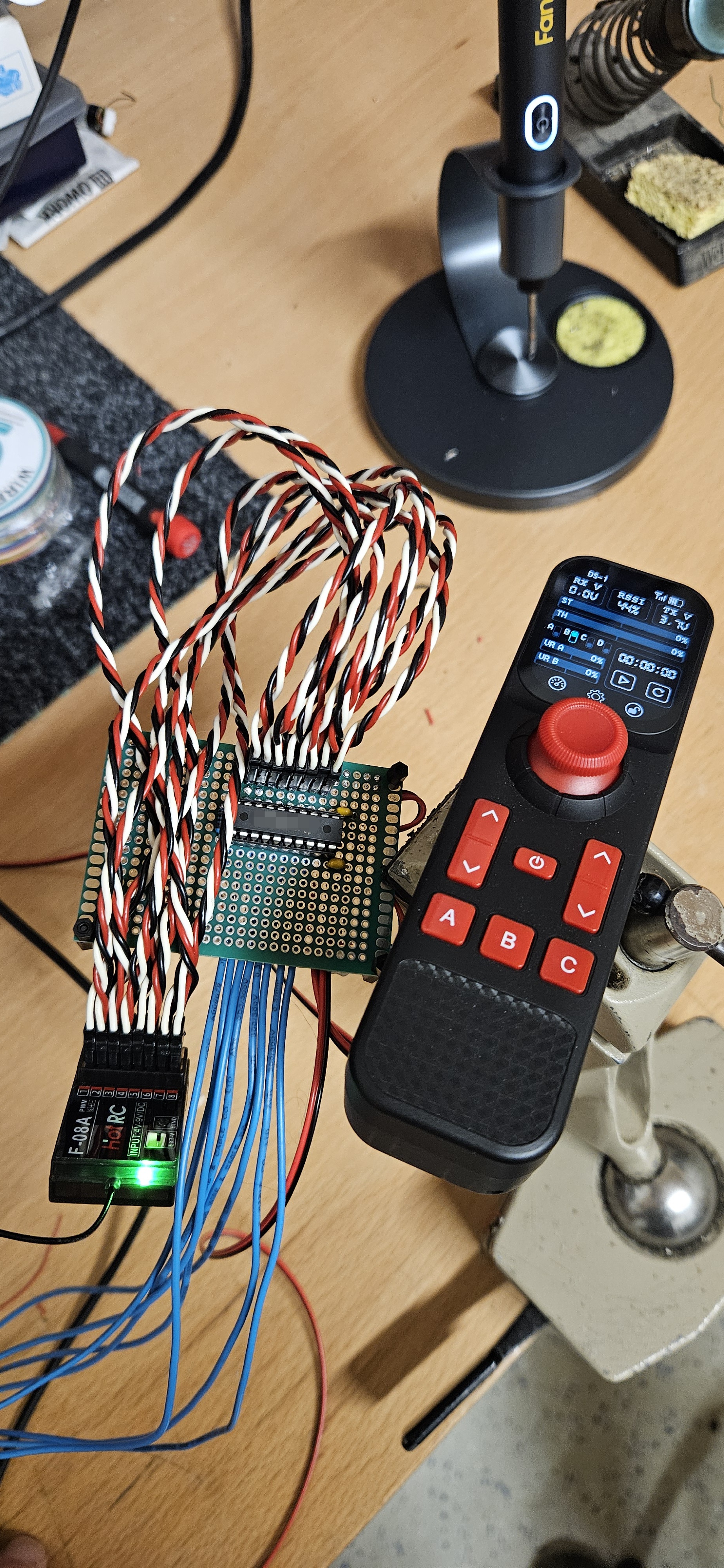
Today marked another important milestone in the control system integration of the JÄGER-1 UGV. The main focus was connecting the HotRC DS800 remote control system to the vehicle’s central control electronics.
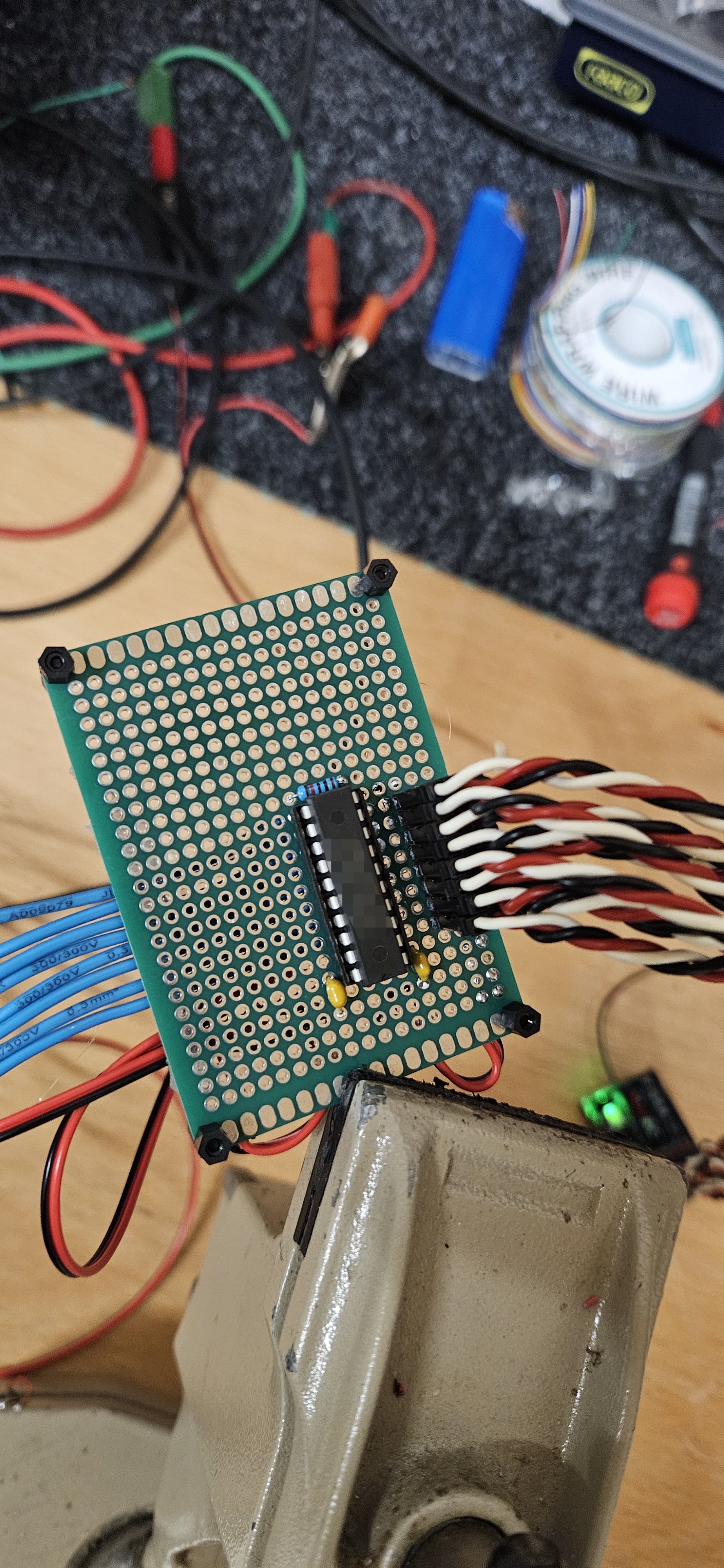
The first step was the fabrication of the custom wiring harness between the HotRC F-08A receiver and the level-shifting interface. At the same time, a dedicated PCB for the level-shifting circuitry was manufactured to provide a compact, robust and reliable solution for permanent integration into the vehicle.
The interface was then connected to the central control unit, followed by the implementation of the first software components required to process the incoming RC signals. The individual control channels can now be read reliably and processed within the control system.
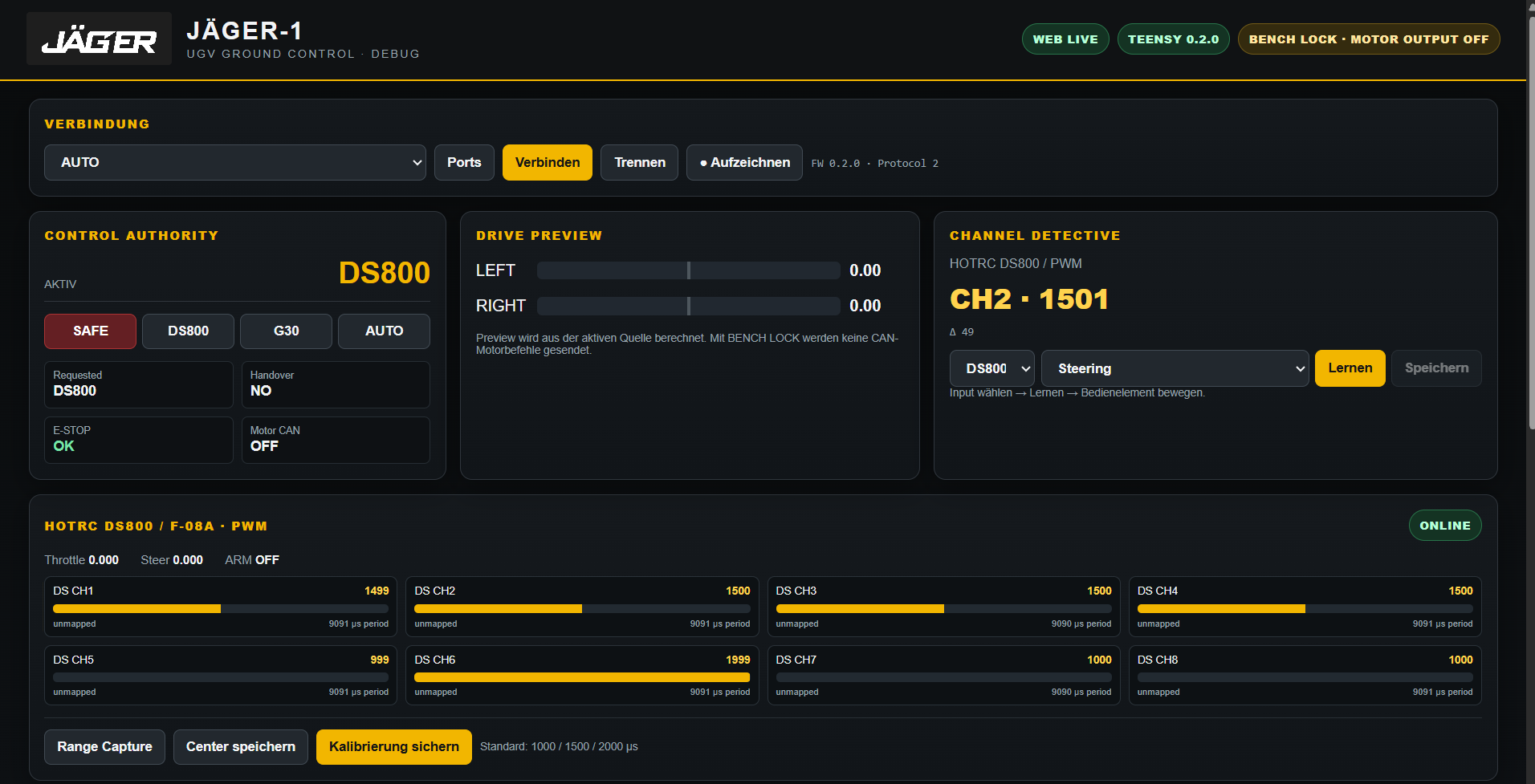
In addition, the developed web interface was tested and linked to the incoming control data. During the first complete functional test, the DS800 signal chain was successfully verified from the F-08A receiver through to the central control system. Remote-control movements and channel values were displayed and monitored in real time through the web interface.
For the first time, the complete signal chain is now operational:
DS800 → F-08A Receiver → Level-Shifting Interface → Central Control System → Web Interface
This setup provides the foundation for the next development stages: direct transmission of control commands to the motor controllers and, later on, the integration of manual remote control, ROS 2 and autonomous vehicle operation.
Sensor architecture refined
The target architecture for navigation and 360° perception has been refined.
The 360° LiDAR will be mounted in an elevated position to keep its field of view as unobstructed as possible. A SLAMTEC Aurora S module is planned for front perception. Four compact RGB cameras for 360° video and a forward-facing thermal camera are also included. Together, they form the sensing foundation for teleoperation, mapping, obstacle detection and later sensor fusion.
VESC drivetrain: Flipsky 75100 Pro V2
The motor controller architecture for the tracked drivetrain has been selected.
The two drive motors will use a VESC-based solution with Flipsky 75100 Pro V2 controllers. The architecture is intended to integrate CAN, telemetry and a dedicated microcontroller for vehicle I/O later on. Initial commissioning remains deliberately manual before autonomy and ROS 2 are added.
Original battery successfully enabled
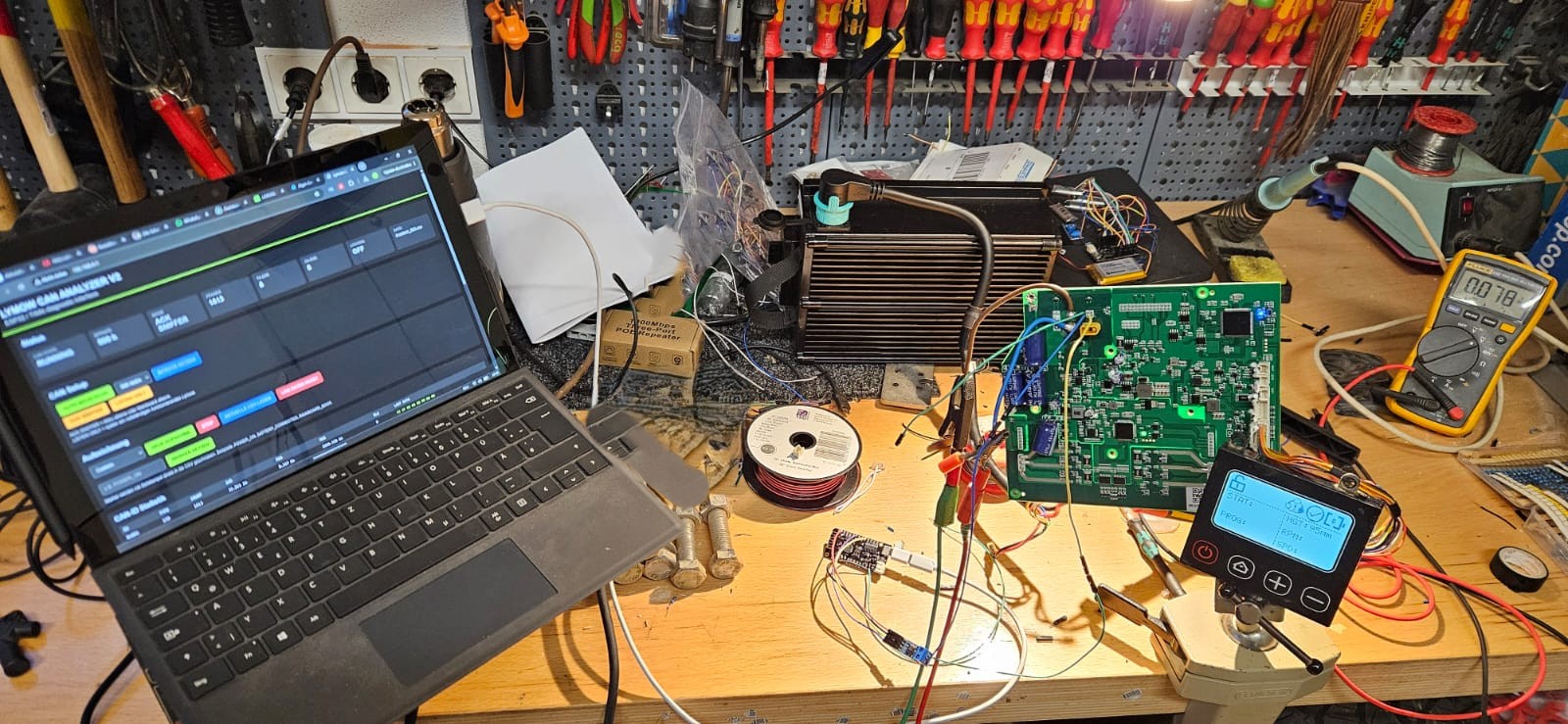
The enable logic of the existing Lymow battery has been identified.
After measuring the auxiliary lines, the battery enable line was identified. A 4.7 kΩ resistor can be used to switch the battery on. This allows the existing energy storage system to remain in use for the prototype while CAN communication and future telemetry are investigated separately.
04 // GALLERY
Images from development
JÄGER-1 // BUILD IN PUBLIC